
Local governance and community heritage protection
Local governance forms the backbone of heritage preservation at the grassroots level. When decisions are made locally, leaders better understand historic landmarks, neighborhood stories, and long-standing traditions. Councils often create policies that protect cultural identity while guiding responsible growth. Through planning permissions and heritage listings, they ensure community voices are heard before changes happen. This approach builds local accountability and encourages residents to take pride in their surroundings. Over time, such involvement helps maintain a sense of belonging, proving that heritage protection works best when guided by people who live with it every day.
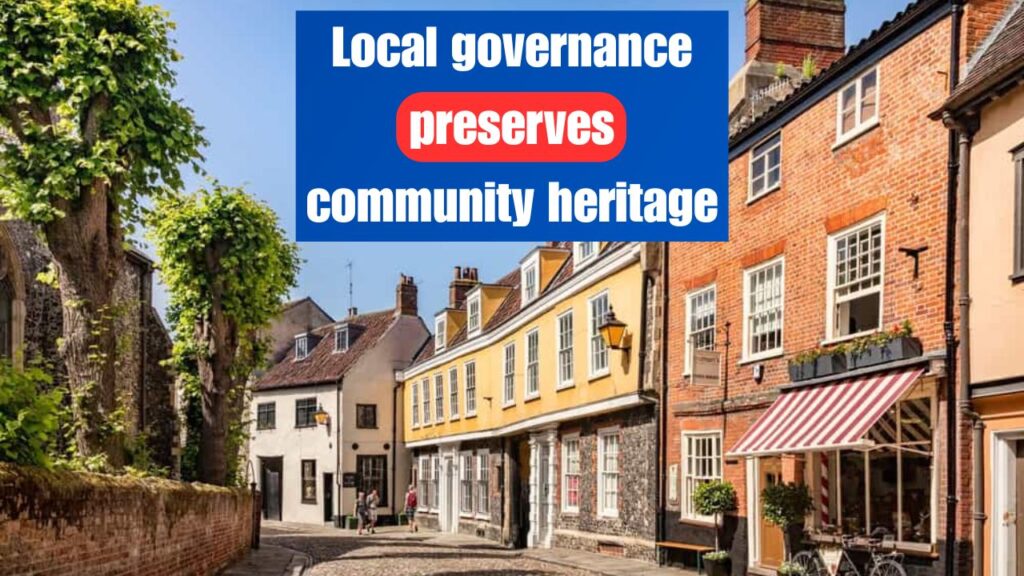

Role of local authorities in preserving heritage
Local authorities are often the first line of defense for preserving what makes a place unique. They support heritage conservation through grants, awareness programs, and partnerships with historical groups. By enforcing zoning rules, councils help maintain architectural character and prevent unchecked development. Public consultations promote civic participation, allowing residents to contribute ideas and concerns. Additionally, investing in educational initiatives helps younger generations understand why heritage matters. Together, these efforts show how structured local action can turn preservation into a shared community responsibility rather than a top-down directive.

Why community-led governance matters for heritage
Community-led governance ensures that preservation efforts reflect real local values. When residents collaborate with councils, shared decision making becomes possible, leading to solutions everyone supports. Local projects often strengthen social cohesion by bringing people together around common goals. Protecting heritage also supports sustainable development, ensuring growth respects the past. Over time, these efforts reinforce place-based identity, helping communities remain distinctive in a globalized world. Such models prove that heritage thrives not through rigid control, but through cooperation rooted in local experience.
Summary and practical insights
The importance of local governance in preserving community heritage lies in its closeness to everyday life. Strong local systems encourage long term stewardship rather than short-term gains. They balance progress with cultural continuity, ensuring history remains visible and relevant. By fostering public trust, local bodies motivate residents to participate actively in preservation efforts. Ultimately, when governance and community work together, heritage becomes a living part of daily life, not just a memory locked in the past.
| Aspect | Role of Local Governance | Community Benefit |
|---|---|---|
| Planning Control | Regulates development | Protects historic areas |
| Funding Support | Provides local grants | Restores heritage sites |
| Public Consultation | Engages residents | Inclusive decisions |
| Education | Promotes awareness | Youth involvement |
Frequently Asked Questions (FAQs)
1. What is local governance?
It refers to decision-making by local councils or bodies closest to the community.

2. How does it help preserve heritage?
It creates locally informed policies that protect cultural and historic assets.
3. Why is community involvement important?
Local participation ensures preservation reflects real community values.
4. Can heritage protection support development?
Yes, balanced governance allows growth while respecting historical character.

